
Get to the data goldmine hiding in your reps' camera rolls
Most field teams already take a lot of photos in stores. A rep snaps the shelf before leaving, maybe the end cap if the campaign is live, maybe a competitor's display if something looks off, and all of it ends up… somewhere. A camera roll, a group chat, a folder nobody else has access to.
None of that disorganization is a data problem yet, but it becomes one the moment someone upstream wants to ask a question the photos should be able to answer, and can't, because nothing about how they were taken makes them searchable.
What Scout does for your team
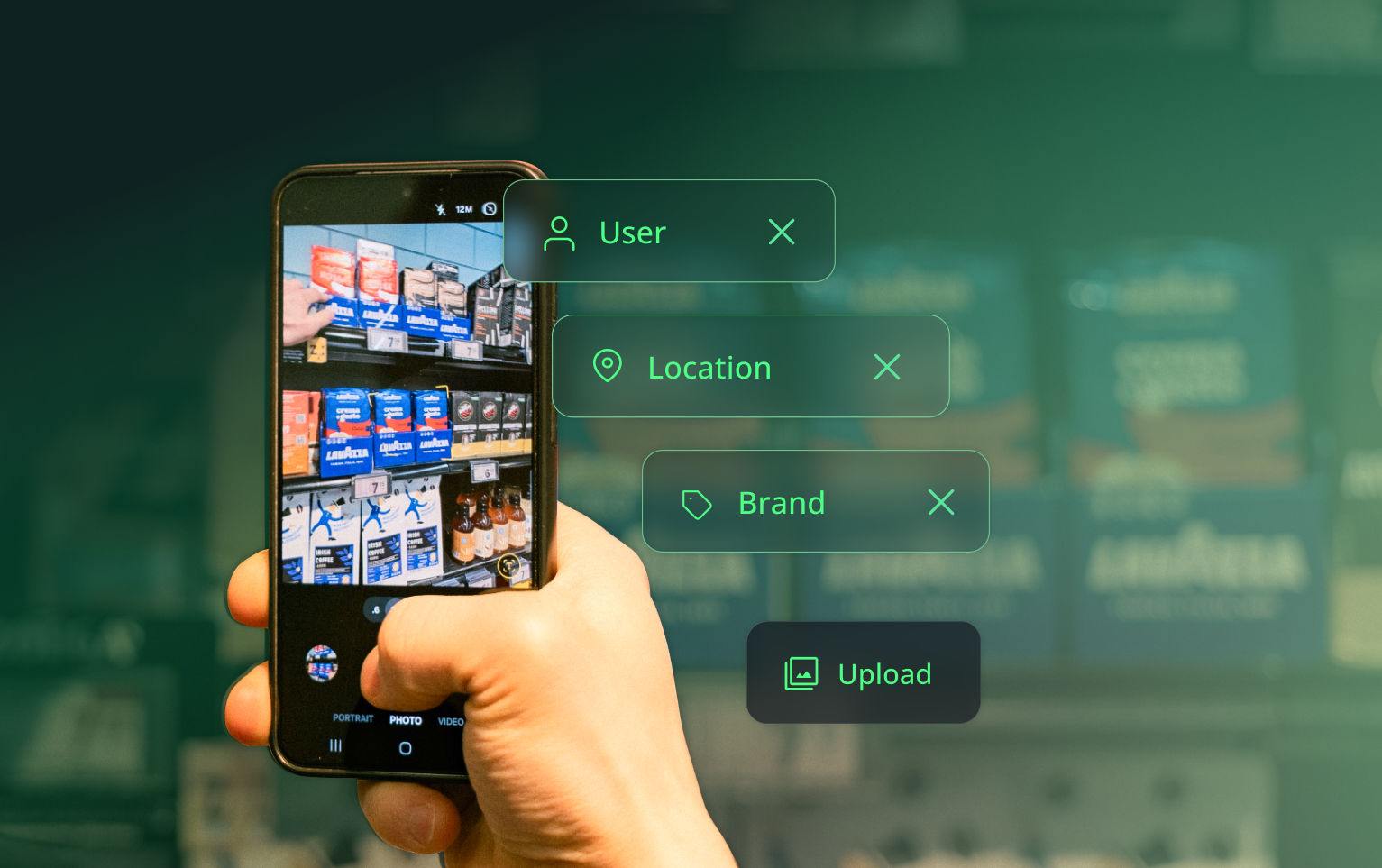
Scout is Salesframe's in-store capture module, built so reps can photograph what's happening in a store and tag it with the context that makes it useful later: location, chain, product, campaign, whatever the admin has set up as relevant.
The photo itself was never the hard part, but getting those photos at scale and as something usable definitely was. Getting a hundred reps to capture the shelf and tag it on schedule is the part that turns individual snapshots into a useful dataset for field sales operations.
Scout is was launched in Q2 2026, and the first customers’ feedback has confirmed our hypothesis: the collaborative feed and the social layer (likes, comments, a way for a rep in one region to see what a rep in another region is doing) get people capturing more consistently than a compliance mandate ever has done on its own.
Scout works for getting the reps capturing the field. We’ve also heard feedback that it’s faster to use than competing products.
Why image recognition needs organized photos before it needs AI
There's a version of this conversation that jumps straight to AI image recognition: point a model at a shelf photo and have it detect out-of-stocks, measure share of shelf, or flag a planogram compliance issue automatically. That's a real and useful layer, and plenty of retail execution tools already offer some version of it. What gets skipped over is that none of it works on a folder of untagged photos with inconsistent naming and no metadata attached.
Image recognition and shelf analytics need to know what they're looking at before they can measure it: which chain, which store format, which campaign was live at the time, which product category the shelf belongs to. Without that structure, an AI model can still describe a photo, but it can't tell you whether the shelf in Helsinki matched the brief the way the shelf in Stockholm didn't, because there's no consistent tagging connecting the two.
Scout's job is to make sure that structure exists from the moment the photo is taken, so whatever analytics layer gets built on top of it has something coherent to work with.
Connecting Scout to the AI tools your team already has
A lot of organizations already have an AI tool they trust: Copilot inside Microsoft 365, Claude, ChatGPT, and many more. Salesframe isn't trying to replace that with a proprietary AI agent.
The more useful move is connecting Scout's organized, tagged photo library to whatever AI environment your team already uses, so a trade marketing manager can ask a direct question (which markets had the weakest display compliance for the summer campaign, or how many outlets in a chain never got the new POS materials set up) and get an answer pulled from real, structured field data instead of waiting for someone to compile a report manually.
This only works because the underlying photos are organized in the first place. Feed the same question to an AI tool pointed at a disorganized camera roll and you get a plausible-sounding guess. Feed it Scout's tagged, systematic capture and you get something closer to an actual answer.

What's next for field sales: one line of sight from the first pitch to the finished campaign
The next step on the roadmap is connecting Scout and Salesframe more directly into your team’s workflow through an MCP integration, so the same AI tools your organization already trusts can see the whole picture: the materials a rep prepared before a visit, what was really presented, whether the follow-up got opened, and what Scout captured in the store afterward.
Right now those pieces live in the same platform but get analyzed somewhat separately. The goal is full visibility across the entire field sales process, from the first pitch to the campaign retrospective, without switching tools or exporting data to stitch the story together manually.
This is still in development and it's the direction the AI integration work on the roadmap is heading. Scout's tagging structure is a big part of what makes it possible.
FAQ
Does Scout include AI image recognition? Not in the current version. Scout focuses on organized, systematic photo capture with consistent tagging. AI-powered analysis, including image recognition, is designed to connect to that structured data rather than live inside Scout as a built-in model. However, we’re developing the tool continously, and native image recognition is on its way.
Can Scout connect to tools like Copilot, Claude, or ChatGPT? Salesframe's approach is to connect Scout's organized field data to whatever AI environment an organization already uses rather than build a separate proprietary AI agent. This lets teams ask questions of their own field data using tools they already trust.
Why can't AI analyze shelf photos without proper tagging? An AI model can describe an untagged photo, but it can't reliably compare it against a campaign brief, a chain standard, or another market without consistent metadata, like which store, which campaign, and which product category the photo belongs to. That structure has to exist before analysis is possible.
Is Scout available to all Salesframe customers? Scout works both as an standalone app and as added licenses to your current Salesframe setup. Contact us to get Scout for your team.