
Field reps are not the only ones who need a clear story. FMCG key account managers live in a different world, but run into many of the same problems.
Their “store visit” is a JBP meeting, a range review or a promo discussion at chain head office. Instead of shelves and backrooms, they sit in meeting rooms and Teams calls with people who oversee whole categories and regions. Yet a lot of that work still runs on heavy decks pulled from old email threads and folders nobody fully trusts.
Salesframe can calm that part down a bit.
For a KAM, Salesframe is a place where the chain story lives. The yearly plan, range discussions, promotions, category rationale. Not a new deck every time, but a structure that stays the same while the content inside it updates. You can tweak it per chain without rebuilding from zero.
Preparing for a meeting then becomes more about thinking than hunting. You pull the latest category slides, add the specific numbers you want to highlight and choose a few real execution examples from the field. Store photos, displays, activations, not just mockups. What the field shows in stores is the same story you bring to head office.
The data side can live in the same place. With Power BI or similar embeds, you can open live numbers inside Salesframe while you talk. Instead of switching between tools, you move naturally between story, visuals and data.
Here is the category story
Here is how it really looks on shelf
Here is what the numbers say.
One flow, without changing window every two minutes.
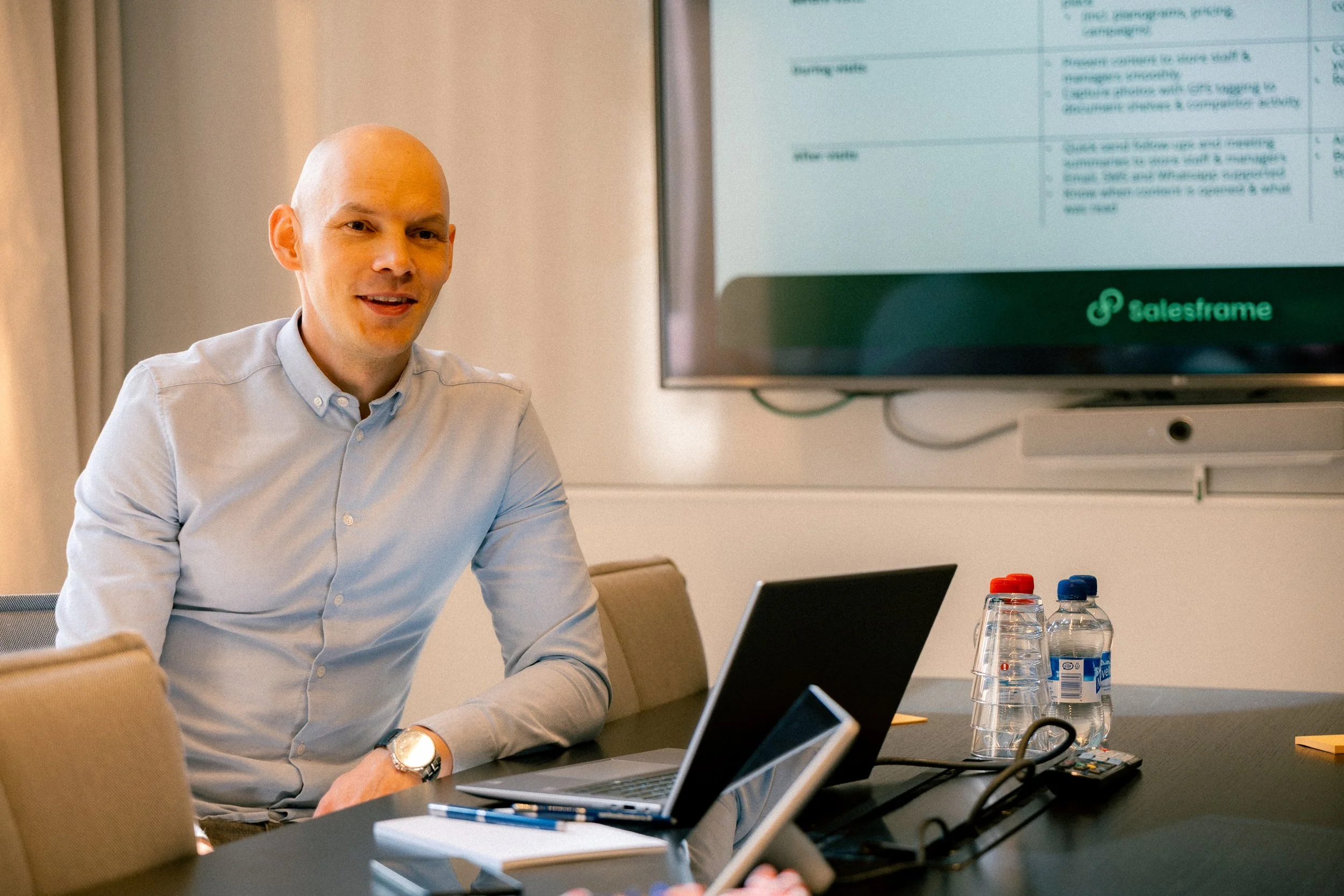
This is Henri, our Sales Director, confidently cosplaying a KAM
Follow up can be simpler too. Instead of sending a big file and hoping it gets forwarded intact, you send a clean link with the key content. Your counterpart can open it on any device and share it inside their own organisation. You see what was viewed and when, which quietly tells you what they found useful.
The interesting part is what happens over time.
KAMs and field teams use the same platform for different moments of the same relationship. Head office hears the story. Stores see it played out in visits. Photos and examples from the field come back into the next head office meeting. Data from both sides sits next to the narrative.
The tool itself is not the point. The point is that the chain hears one clear story and then sees it actually happen in stores. When those two stay close to each other, conversations become less about defending plans and more about growing the business together.